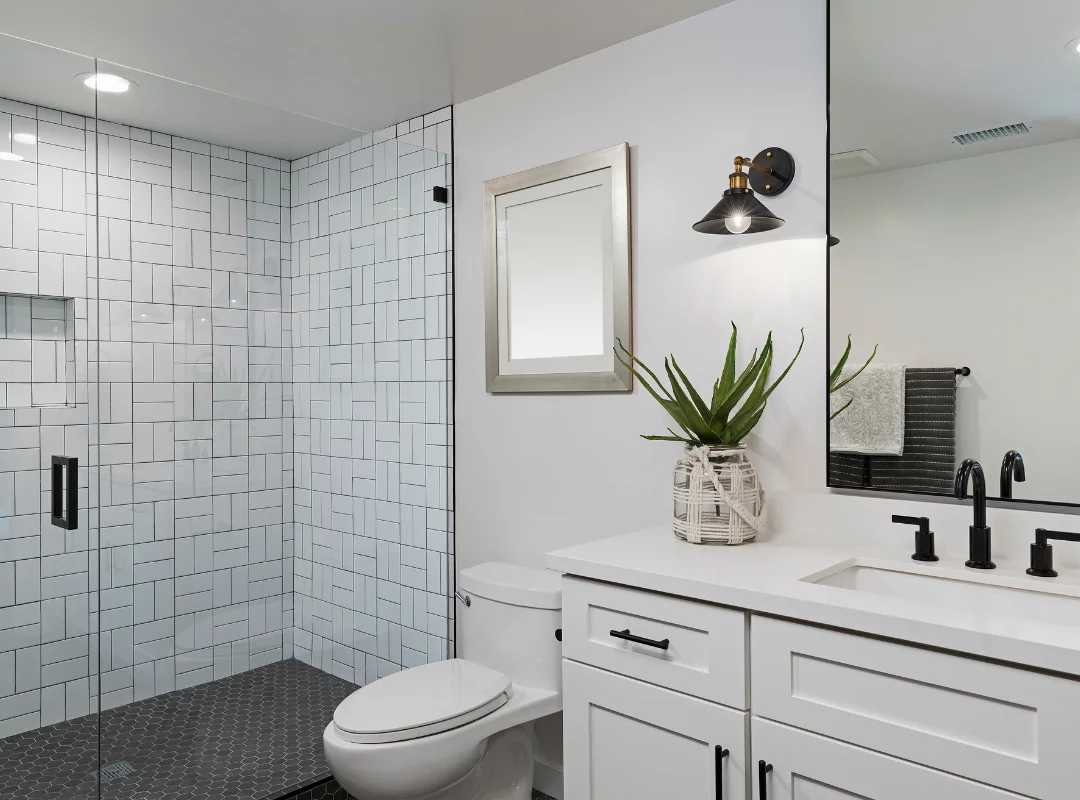
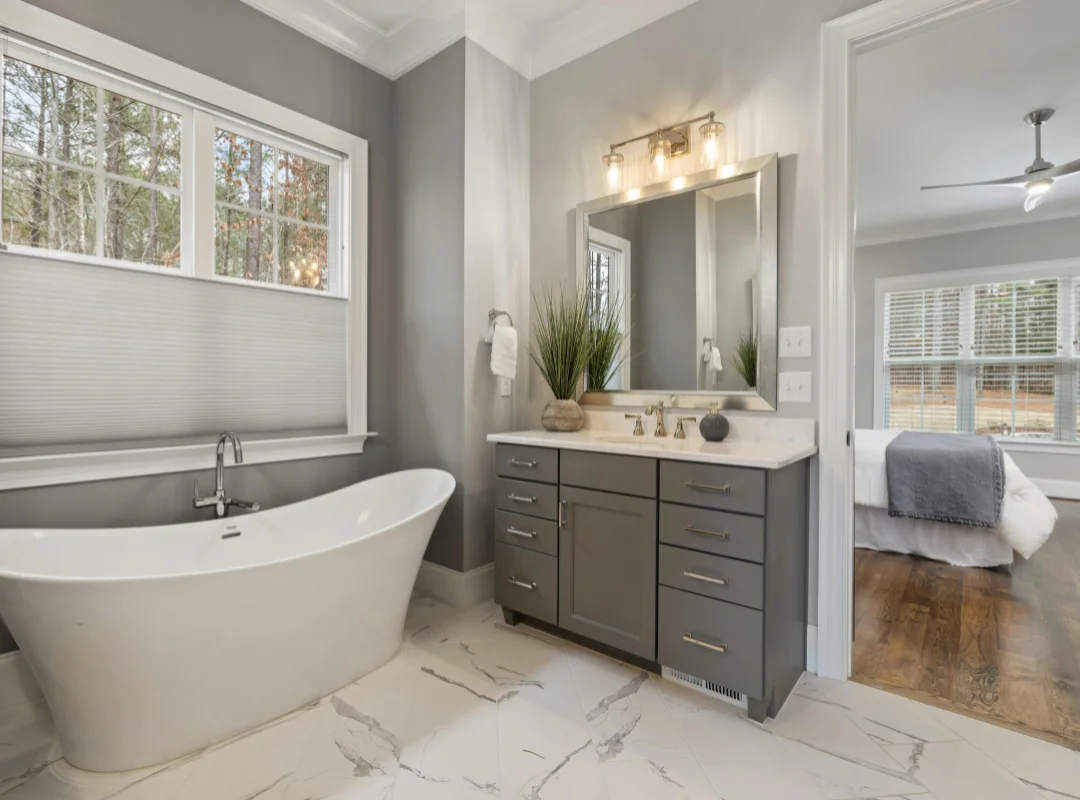
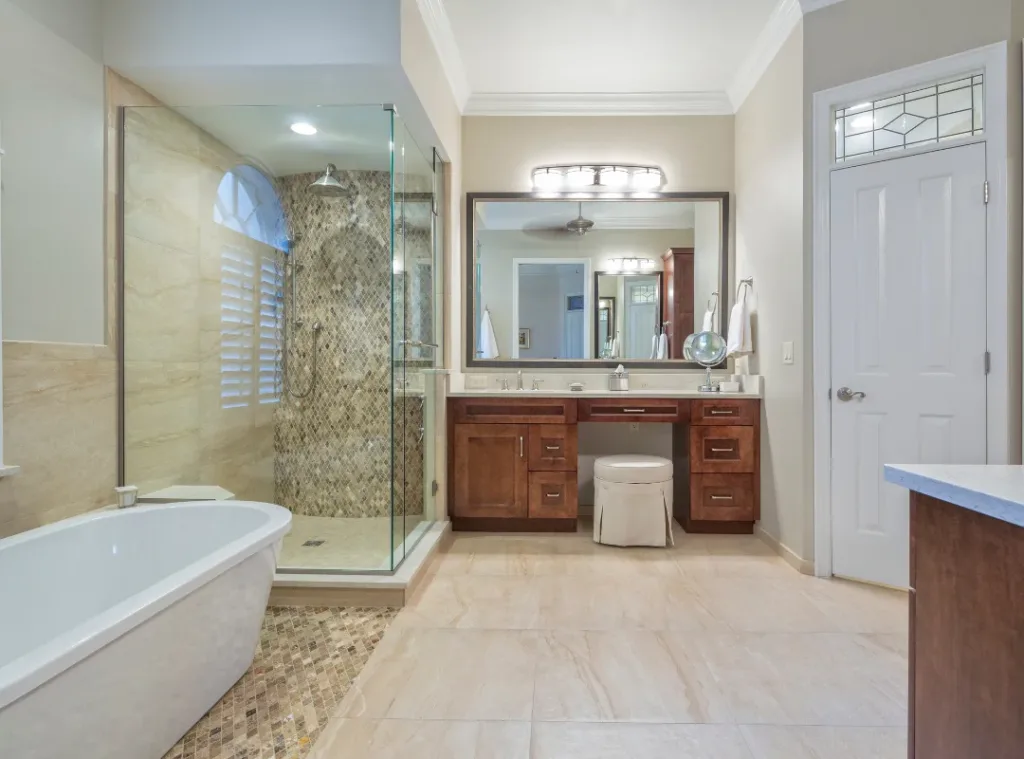
The most flattering bathroom paint colors are soft blush, peach, and warm beige because they reflect warm light onto your skin instead of cool tones that can make you look washed out. If you prefer a spa-inspired bathroom, muted blues, blue-greens, and warm grays are excellent choices.
The color you see on the walls affects how your skin looks in the mirror, how your makeup appears, and even how large or bright the room feels. This guide explains which bathroom colors work best, where they work, and how to choose one that fits your space and your style.
Why Your Bathroom Wall Color Matters
Bathroom walls reflect light back onto your face. That reflected light changes how your skin tone appears in the mirror. This is one reason why you may look refreshed in one bathroom but tired in another, even under similar lighting.
Warm colors, such as blush, peach, and soft beige, reflect warmer light that complements most skin tones. Cooler colors, including blue and gray, create a calm atmosphere, but they can make some complexions appear pale if the room relies on cool LED bulbs.
Because of this, don’t choose paint based only on a small color swatch. Always consider the room’s lighting, fixtures, and finishes together. Reviewing the top bathroom renovation mistakes to avoid helps you avoid picking a shade that clashes with your tile under different lighting conditions.
The Most Flattering Bathroom Paint Colors
If your goal is to look your best in the mirror every morning, warm colors are the safest choice.
Soft blush and muted peach are popular because they mimic natural skin tones instead of competing with them. That’s one reason salons and makeup studios often use these colors. They help create a healthier, more balanced reflection under everyday lighting.
Warm beige and creamy neutrals offer a similar effect if pink isn’t your style. These shades feel timeless, pair well with natural wood or white cabinetry, and work with both modern and traditional bathrooms.
If you’re looking for bathroom color ideas that won’t feel outdated in a few years, warm neutrals remain one of the safest long-term investments.
How Natural Light Changes Paint Colors
A bathroom that receives plenty of morning sunlight often makes cool colors appear softer and brighter. On a sunny day, a muted blue or eucalyptus green may look fresh without feeling cold.
Bathrooms with little or no natural light behave differently. In these spaces, cool gray or pale blue can sometimes make the room feel darker than expected. Warm beige, soft cream, or blush usually helps brighten the space while keeping it comfortable.
Before choosing any paint, test a sample on multiple walls and observe it in the morning, afternoon, and evening. A color you love in the store may look completely different once it’s inside your home.
The Best Colors for Small Bathrooms
Soft cream, warm beige, pale blush, and light blue all help small bathrooms feel open by reflecting light effectively without creating harsh contrast.
Dark colors can also work in compact spaces, but only when used intentionally. For example, painting one feature wall behind the vanity can add depth without making the room feel enclosed.
The goal isn’t simply choosing a light color. It’s choosing a color that works with your bathroom flooring, lighting, and cabinetry so the entire room feels cohesive.
When Bold Bathroom Colors Make Sense
Deep navy, forest green, charcoal, and rich terracotta can create a dramatic look in larger bathrooms with plenty of natural or layered lighting. These colors often become the focal point of the room while allowing white fixtures and natural wood finishes to stand out.
In smaller bathrooms, however, using bold paint on every wall can make the room feel visually heavy. Many designers instead recommend introducing stronger colors through an accent wall, vanity, or decorative accessories.
This approach gives you flexibility if your preferences change later without requiring a complete repaint.
How to Choose the Right Bathroom Color
If you’re still deciding, start by asking yourself three simple questions.
First, who uses this bathroom the most? If it’s your primary bathroom, choose colors that flatter your own skin tone. For guest bathrooms, neutral shades usually appeal to a wider range of people.
Second, how much natural light does the room receive? Bright bathrooms can comfortably handle cooler colors, while darker rooms usually benefit from warmer tones.
Finally, what feeling do you want the space to create? Warm neutrals feel welcoming and timeless. Cool blues and greens feel calm and relaxing. Rich, darker shades create a more luxurious bathroom design when the room has enough space and lighting to support them.
Conclusion
The best bathroom paint color isn’t simply the latest trend. It’s the one that works with your lighting, complements your finishes, and makes the room comfortable to use every day.
When you’re talking with a remodeling professional, ask them how your lighting, vanity, tile, and paint will work together, rather than discussing each feature separately. Looking at the bathroom as a complete design leads to better long-term results.
Choose the Best Bathroom Paint Colors with Liberty Renovation
Ready to update your bathroom? Liberty Renovation can help you choose finishes, colors, and layouts that fit your home and your lifestyle. Whether you’re refreshing a guest bathroom or planning a complete bathroom remodel, our team can guide you from your first ideas to the finished space. Contact us now!
Frequently Asked Questions
Does bathroom lighting matter as much as paint color?
Yes. Lighting and paint work together. Even the best paint color can look completely different under cool LED bulbs than it does under warm lighting. Always evaluate paint samples using the lighting you’ll have after the renovation.
What paint colors work best with white bathroom fixtures?
Warm beige, soft cream, blush, muted blue, and light gray all pair well with white fixtures. The best option depends on whether you want the bathroom to feel warm and welcoming or cool and spa-like.
Should my bathroom match the rest of my house?
It doesn’t have to match exactly, but it should feel connected. Using similar undertones throughout your home creates a smoother transition between rooms while still allowing each bathroom to have its own personality.
Is white still a good bathroom color?
Absolutely. White remains a classic choice, especially when paired with natural wood, stone, or warm metal finishes. However, softer whites and warm neutrals often create a more inviting look than bright, stark white walls.
What's the biggest mistake people make when choosing bathroom paint?
Many homeowners choose paint before considering their lighting, flooring, vanity, and tile. Testing paint samples in your own bathroom before making a final decision is the best way to avoid expensive mistakes.