
What Are The Most Common Kitchen Layout Mistakes?
Not Giving Storage Space the Attention It Deserves
Storage space makes or breaks a kitchen. Many common kitchen layout mistakes begin with ignoring how much prep and storage space you really need. Wall cabinets, base cabinets, and closed-door cupboards should sit in practical locations that don’t block natural movement.
People often forget to use vertical wall space when planning a kitchen remodel. Open shelving above a decent expanse of countertop space can hold small appliances or food processors that would otherwise crowd the counter. When you skip this planning stage, you end up with wasted space and no room for daily essentials. If you’re planning your dream house, you should focus on the details.
Overlooking Countertop & Prep Areas
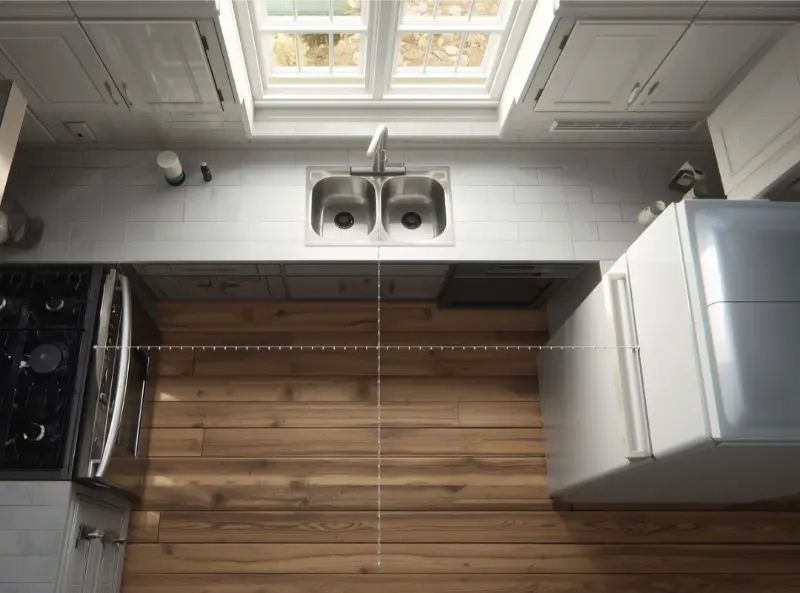
Countertop space is your working stage. You need enough space to prepare meals, handle dirty dishes, and still keep other appliances ready for use. Many kitchens fail because the designer underestimated the amount of counter space needed around sinks, gas cooktops, or near the refrigerator.
Without enough storage space, you feel cramped even in a large kitchen. The simplest fix is to plan a continuous work surface with minimal interruptions. Keep small appliances grouped, and leave a clear cooking zone near the stove to maintain flow.
Ignoring the Work Triangle
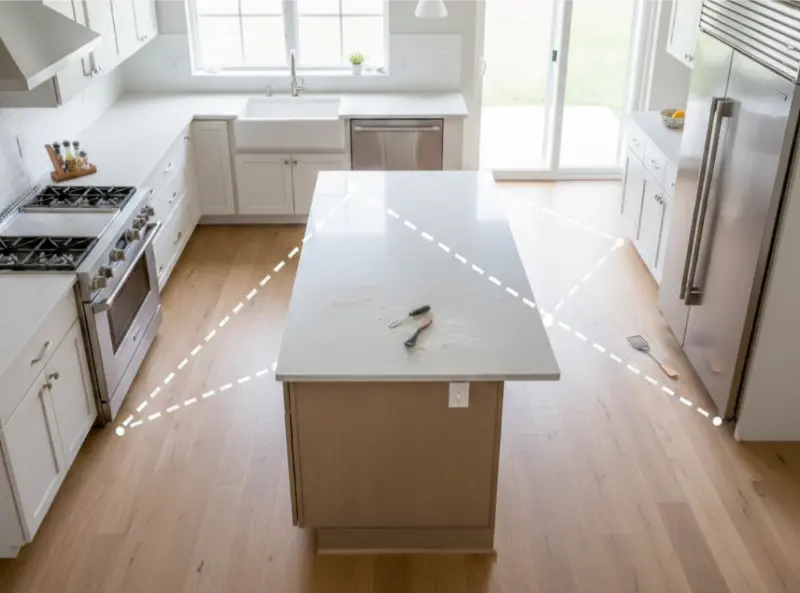
The work triangle (your sink, refrigerator, and cooktop) is an important aspect of interior design. It keeps the three points of your kitchen within a comfortable distance. If you place these in the wrong spot, you end up walking in circles or bumping into family members.
A kitchen designer looks at circulation space so you have enough room to move quickly and safely between tasks. Poorly arranged appliances or blocking doorways break the triangle and increase frustration. What you need is a mapped-out interior so you have an organized kitchen.
Oversized or Undersized Kitchen Islands
A kitchen island adds storage, countertop space, and even a breakfast bar. But island size matters. Too big, and it steals floor space and circulation space. Too small, and it becomes a wasted space with no real function. You might have to install new flooring to accommodate add-ons.
Many common kitchen design mistakes stem from not measuring enough room around the island. Leave clear aisles so doors, drawers, and other appliances open without hitting anything. When planned correctly, an island doubles as a prep area, dining area, and social hub.
Forgetting About Proper Lighting
Poor lighting is one of the most common kitchen layout mistakes. Kitchens need ambient lighting for the whole room, accent lighting for style, and task lighting for work zones. Recessed lights directly overhead emit sufficient light for general tasks. Accent lighting under wall cabinets adds style while making it easier to prepare meals.
If you install fixtures in the wrong spot, shadows fall over your countertop and cooking zone. Good planning during a kitchen remodel lets you combine natural light with fixtures so you never fight dark corners.
Not Planning Electrical Outlets & Small Appliances
Modern kitchens run on power. You need enough electrical outlets for small appliances such as food processors, coffee machines, or other appliances that rotate in and out of use. Placing outlets only in one section forces you to drag cords across the counter, creating clutter and risk.
Plan outlets along walls, inside custom cabinetry, and even on the side of a kitchen island. This keeps your kitchen space clean, space-efficient, and ready for any gadget.
Wasting Wall Space & Vertical Storage
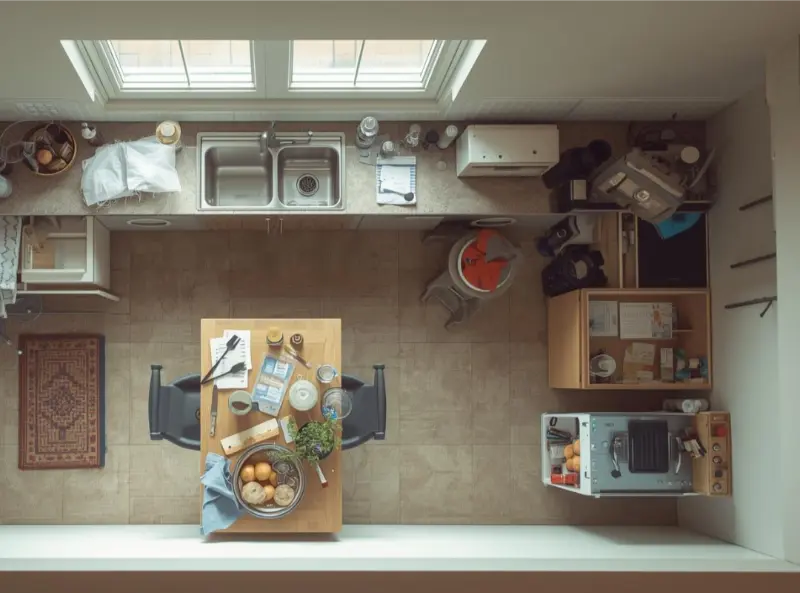
Wall space often sits empty while countertops overflow. Creative use of vertical wall space can save money and increase functionality. Open shelving, hanging rails, or tall wall cabinets make use of areas that normally collect dust.
Many people fear “naked kitchens” with open shelves because they think it will feel messy. In reality, open shelving can create a harmonious look and provide ample storage when styled carefully.
Overloading the Design With Too Many Elements
Too many elements crammed into a single kitchen reduce its functionality. You see this when people try to fit a breakfast bar, a kitchen island, a dining area, and open shelving all in one modest room. The kitchen will feel cramped and block circulation space.
A kitchen renovator or experienced kitchen designer can help you edit the layout. They identify which ideas improve flow and which ideas belong in a new design entirely. Less clutter means more room to move and more focus on the important aspects of your dream kitchen.
Skipping the Planning Stage for Trash & Dirty Dishes
Trash cans, recycling bins, and dish drying areas need practical locations. Many kitchen design mistakes happen because no one considers where dirty dishes go after a meal or how trash leaves the kitchen.
Without a plan, bins sit in the open, or worse, block doorways. Including pull-out sections in base cabinets or a hidden compartment in a kitchen island keeps the kitchen looking clean.
Neglecting the Dining Area & Open Plan Flow
Open plan kitchens blur the line between cooking and living spaces. But without enough space between the cooking zone and the dining area, you lose comfort. Chairs push into the circulation space or block pathways to the refrigerator.
Always measure enough room for chairs to pull out and people to pass behind them. A kitchen that doubles as a social area must protect this flow to feel welcoming.
Poor Placement of Small but Vital Details
Cabinet hardware, sink position, and even the way doors swing can make or break a layout. Improper positioning of handles can catch clothing. Placing a sink too far from the cooking zone slows your workflow.
Positioning gas cooktops under cabinets without sufficient light leads to dark, awkward spaces. These may seem like small points, but they add up to daily irritation. Paying attention early avoids costly changes later.
Not Considering Lighting Temperature & Color
Light does more than emit sufficient light. Its color affects how your food and stainless steel appliances appear. Warm ambient lighting over a dining area makes meals feel cozy. Cooler task lighting over prep areas reveals true colors when preparing meals.
Many homeowners mix fixtures without thinking about color temperature and end up with a mismatched look. Balancing these layers creates a professional finish.
Forgetting How a Kitchen Remodel Affects the Whole Home
Thinking Bold Ideas Are Too Hard
Some people shy away from bold ideas like open shelving, custom cabinetry, or large stainless steel accents because they think it will be fragile, expensive, or complicated to maintain. In reality, with careful planning, these ideas can increase functionality, save money, and create a seamless look.
A new layout that uses practical locations, ample storage, and proper lighting can make even daring designs durable. This mindset lets you step beyond common kitchen layout mistakes and build a space that fits your personality.
Your Next Step Toward a Functional & Stylish Kitchen
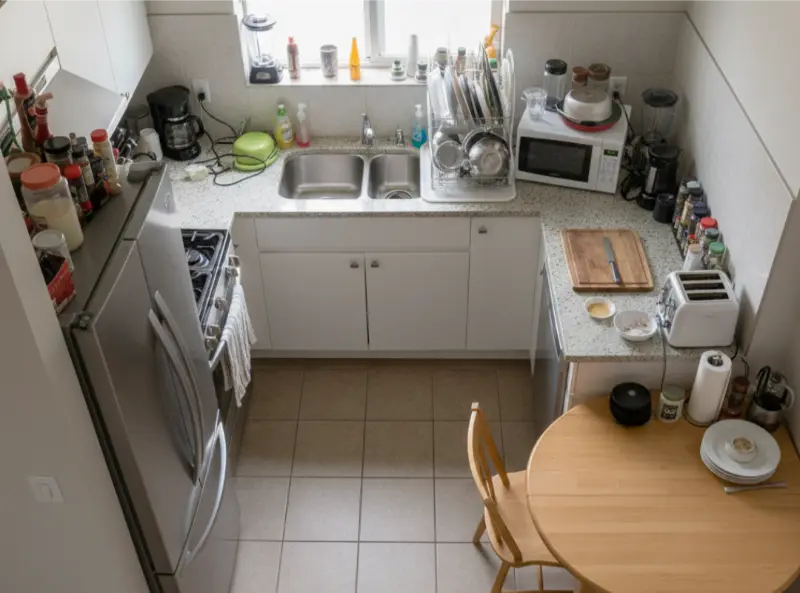
Every kitchen tells a story. The wrong choices during the planning stages create daily frustration. The right choices turn the same square footage into a high-functioning hub where you can prepare meals, entertain, and enjoy your home.
Discover common kitchen layout mistakes and try innovative, practical solutions. Measure your circulation space, plan your storage, layer your lighting, and position your appliances carefully. This approach keeps your kitchen space efficient and organized.
Design a Flawless Kitchen Layout with Liberty Renovation
A great kitchen starts with a great layout. Liberty Renovation’s designers study traffic flow, prep and storage space, and appliance placement. This prevents the classic errors that waste square footage or make cooking a chore. You get a kitchen remodel that works like a dream, where everything you need is within easy reach and your space feels open, not cramped.
If you’ve just learned what the most common kitchen layout mistakes are, now’s the time to plan smarter. Contact us today and let’s map out a kitchen layout that makes sense from day one.