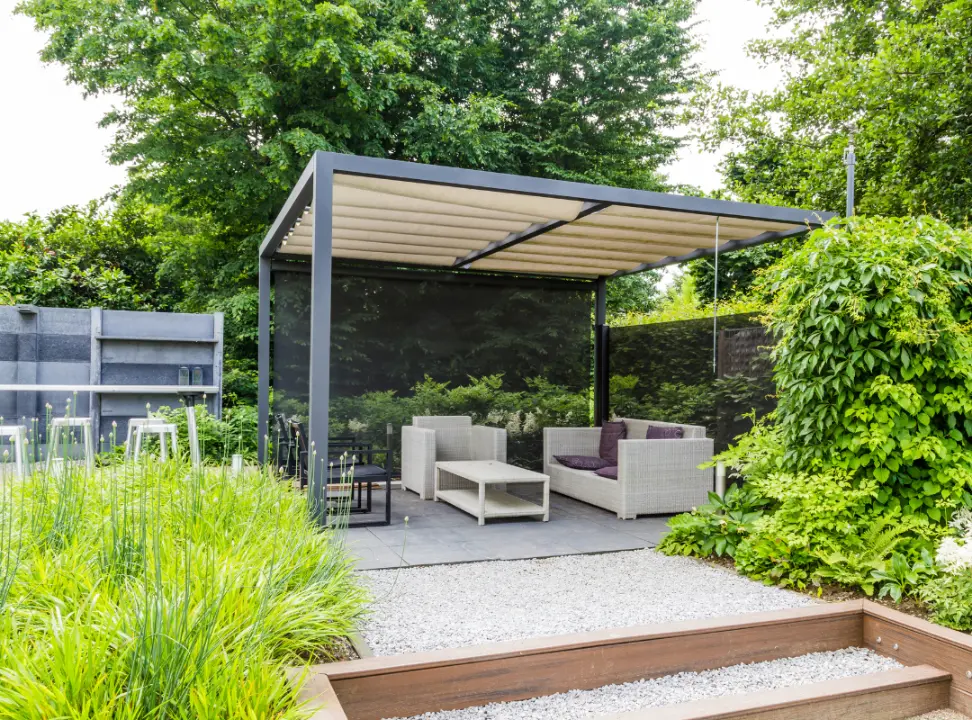
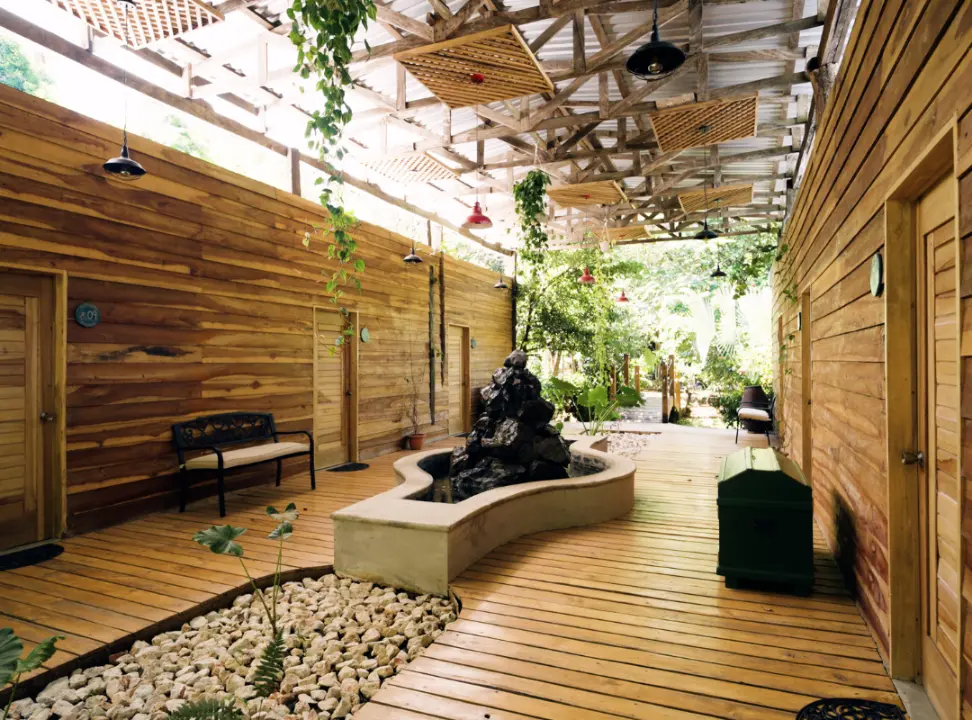
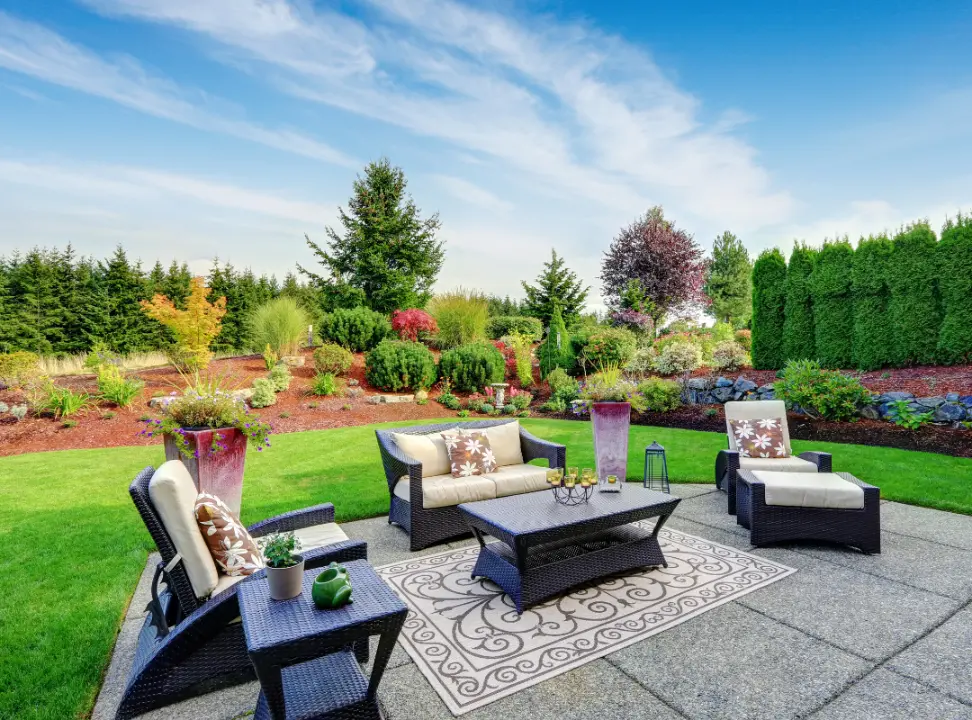
The best patio materials are concrete, pavers, natural stone, brick, and gravel. Concrete costs the least and suits most yards. Pavers cost more but let you lift out one section at a time if it cracks. Natural stone looks best and costs the most.
Brick holds up for decades and fits older homes well. Gravel is the cheapest option and drains well, though it shifts underfoot. Your climate matters too, since freeze-thaw cycles crack poured concrete faster than jointed pavers.
Talk to a local patio contractor to see what holds up best in your soil and weather.
Concrete Pavers
Concrete paver patios are practical and attractive with easy maintenance, which is why they’re the best patio material for most homeowners. They’re made of individual units rather than a single poured slab, so you can pull out and easily replace a cracked or stained paver.
Concrete pavers typically last 25 to 40 years under normal use, and up to 50 years with proper installation and regular maintenance. They come in different styles and colors, so they work with almost any landscape and floor design of the house. They also solve drainage problems in low-lying yards by letting water pass through the joints, so no water pools on the surface.
The one thing to watch: weed seeds can take root in paver joints if they aren’t sealed or filled properly. Concrete pavers require sealing every 2- 5 years to keep the surface stain-resistant and weed-free. This is why homeowners find this the easiest ongoing maintenance among the materials on this list.
Poured & Stamped Concrete Patio Options
Poured concrete typically lasts 20 to 30 years and requires low to moderate maintenance. It also offers clean lines that suit modern architectural styles better than a patterned surface would.
Stamped concrete presses intricate patterns directly into a standard slab. This mimics real brick, stone, or irregular shapes at a fraction of the cost. Either way, concrete patios typically need resealing every 2 to 5 years to resist cracking and prevent staining.
Natural Stone & Cut Stone for a High-End Look
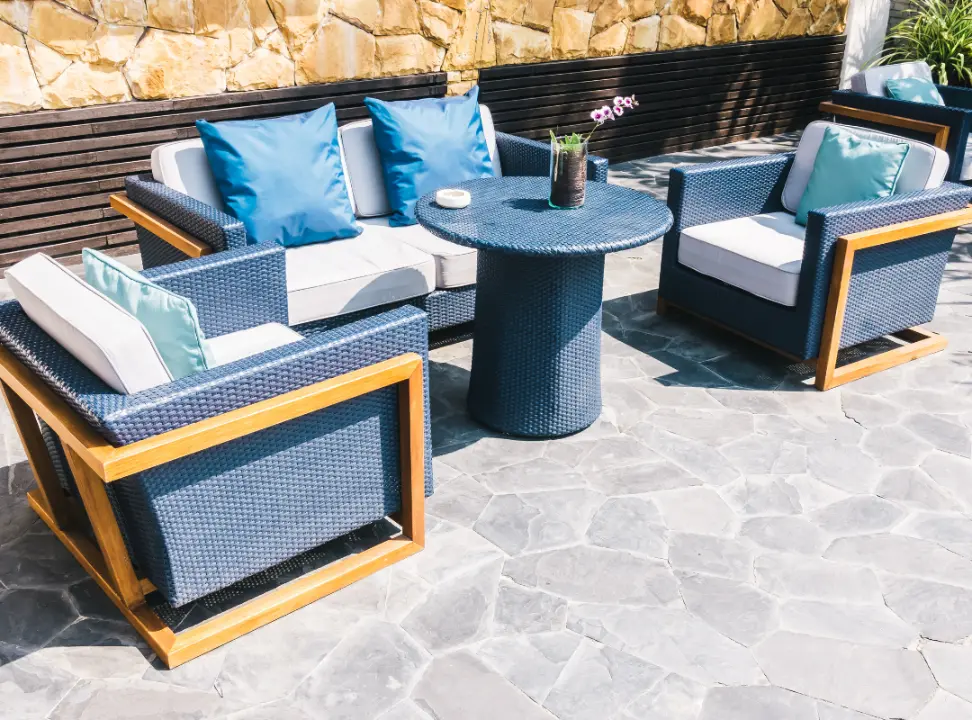
Natural stone patios can last over 50 years with proper care, and many landscape architects consider it the best material for a natural look. It comes in warm earth tones and irregular shapes for a flagstone look, or in cut stone shapes with uniform edges for cleaner lines.
Natural stone patios prioritize appearance and longevity over initial cost, since the material itself typically costs more than concrete or brick. It will require sealing every 1 to 3 years for moisture and stain resistance. Granite, in particular, withstands freeze-thaw cycles effectively, which contributes to its exceptional longevity across different climates.
Brick Patio Materials
A brick patio provides an old-fashioned look that suits rustic gardens and traditional architectural styles. Brick patios can cost between $14 and $20 per square foot and can last 50 to 75 years with moderate maintenance.
This lifespan is longer than that of almost any other patio material on this list. Brick also resists freeze-thaw damage well. That’s why it’s ideal for areas with heavy foot traffic, outdoor furniture, and regular use.
Porcelain Pavers for a Contemporary Outdoor Space
Porcelain pavers can support loads up to 2,000 pounds, making them one of the most durable options for a contemporary outdoor living space. If they have texture, they’ll be more stain- and slip-resistant, which matters most in damp or shaded areas like north- or east-facing patios.
Porcelain pavers are also frost-resistant, making them well-suited for cold climates where other materials crack or shift during a hard winter. Their moisture-resistant, clean, and modern look makes them a favorite among landscape architects.
How to Choose a Patio for Cold Climates
In cold climates, freeze-thaw cycles (or freeze-thaw cycles, however you’ve seen it written) are the real test of any patio material. Water gets into small cracks, freezes, expands, and breaks the surface apart over a few winters if the material isn’t rated for it.
Materials rated to ASTM C1026 are tested to withstand repeated freeze-thaw cycles, so ask your general contractor about your chosen material’s rating.
Best Patio Materials for Hot Climates
In hot climates, surface temperature matters as much as durability. Lighter-colored concrete pavers and natural stone stay noticeably cooler underfoot than dark stamped concrete or dark brick, which can hold heat well into the evening.
Porous materials like natural stone and permeable pavers also stay cooler than dense poured concrete, since they don’t trap as much heat at the surface.
Building a Patio Around a Fire Pit or Seating Area
Choose a stable surface that won’t shift or crack from heat exposure. Brick, natural stone, and porcelain all handle heat better than stamped concrete, which can discolor over time when exposed to a consistent heat source.
Leave enough clearance around the fire pit for outdoor furniture, and make sure the surface stays slip-resistant, since this area often gets wet from spilled drinks or nearby landscaping and can become slippery if the finish is too smooth.
Textured finishes rated for exterior use offer better slip resistance than polished stone, especially in mild climates where rain is more common than snow.
So, Which Material Should You Choose?
No single material is best for every yard. Your choice depends on your needs. So, here’s a recap of the whole guide:
Concrete pavers offer the best balance of cost and durability for most homeowners.
Natural stone and brick win on longevity and visual appeal if budget allows.
Porcelain pavers make the most sense in cold, wet, or high-traffic climates.
Whatever you choose, proper installation matters more than the material itself. A well-installed concrete patio will outlast a poorly installed stone one, so match your maintenance expectations to a contractor who’s installed that specific material type before.
If you’re planning a patio as part of a larger new home build, understand what to expect from new construction. This way, site work and grading for the patio can be planned at the same time.
Plan Your Patio With Liberty Renovation
Liberty Renovation helps homeowners choose patio materials that match their budget, climate, and outdoor living goals. We handle everything from site prep to installation for new construction, additions, and full home remodels.
We can also walk you through how your material choices affect your overall project timeline before you commit to anything. Ready to start planning your outdoor space? Call us at (423) 480-8904 or email info@mylibertyrenovation.com to get an estimate today.
Frequently Asked Questions
What type of patio lasts the longest?
Brick pavers last the longest, often 50 to 75 years with moderate maintenance, and can last indefinitely with periodic re-leveling. Natural stone comes close, often lasting over 50 years with proper care.
What is the coolest patio surface?
Light-colored natural stone and light concrete pavers stay coolest underfoot. Porous, light-colored materials absorb less heat than dark stamped concrete or dark brick in direct sun.
What are common patio mistakes?
The most common mistakes are skipping proper drainage planning, choosing a material not rated for local freeze-thaw cycles, and skipping sealing on stone or concrete.
What is the best shape for a patio?
It depends on the space, but rectangular patios are easiest to furnish and build. Irregular shapes work well for stone patios that follow natural landscape lines instead of straight edges.
How to make a patio look better?
Add a defined edge or border, use warm earth tones or cut stone for visual interest, and keep furniture and a fire pit scaled to the space.